SHIPPED
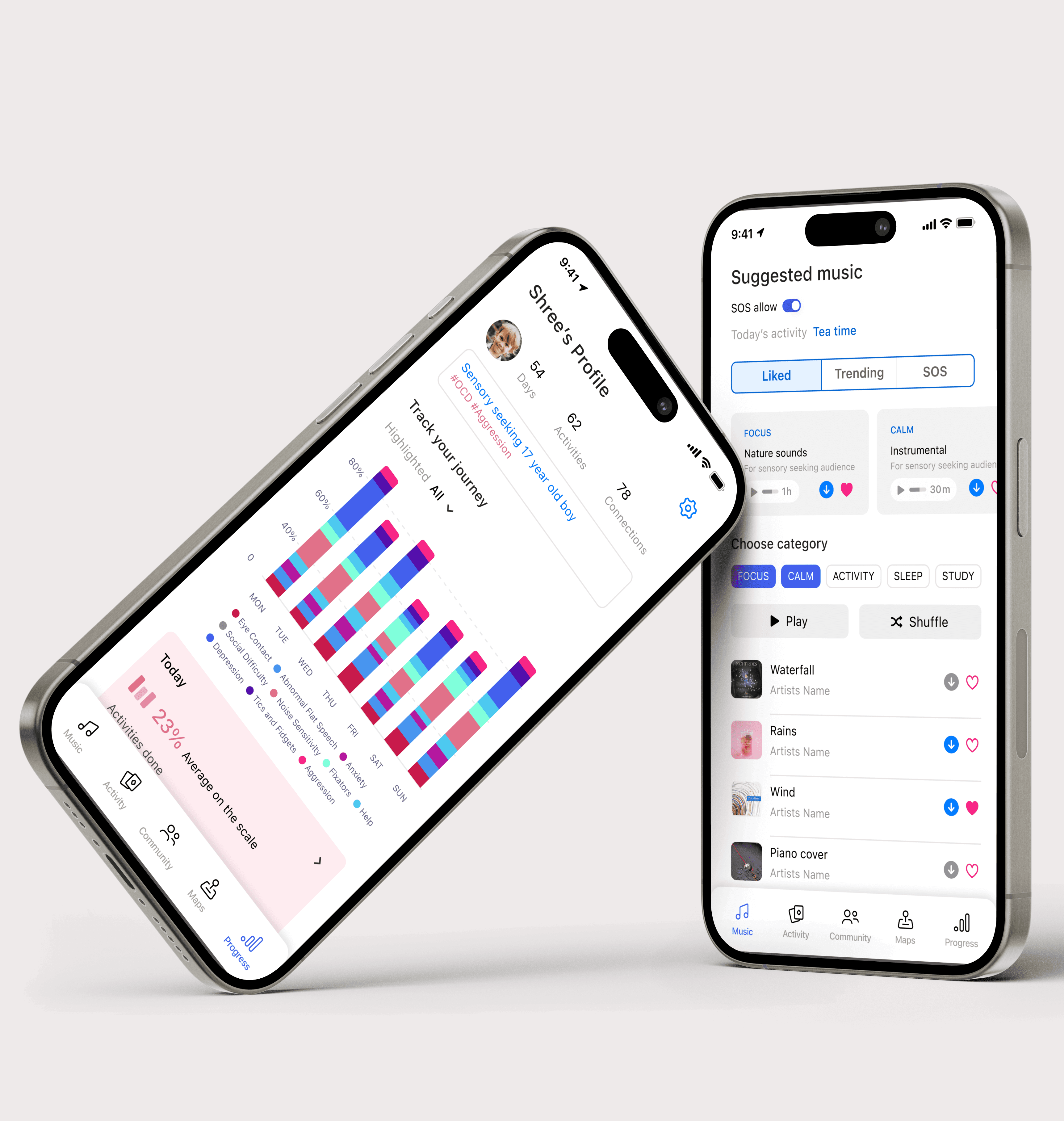
SpectrAble provides a comprehensive care platform that uses automation, extending it far from traditional therapy. Through visuals for component-wise tracking and day-to-day mapping, caretakers better understand the behaviors of their child.
I tested the features across 4 Autism therapy facilities and 2 special schools.
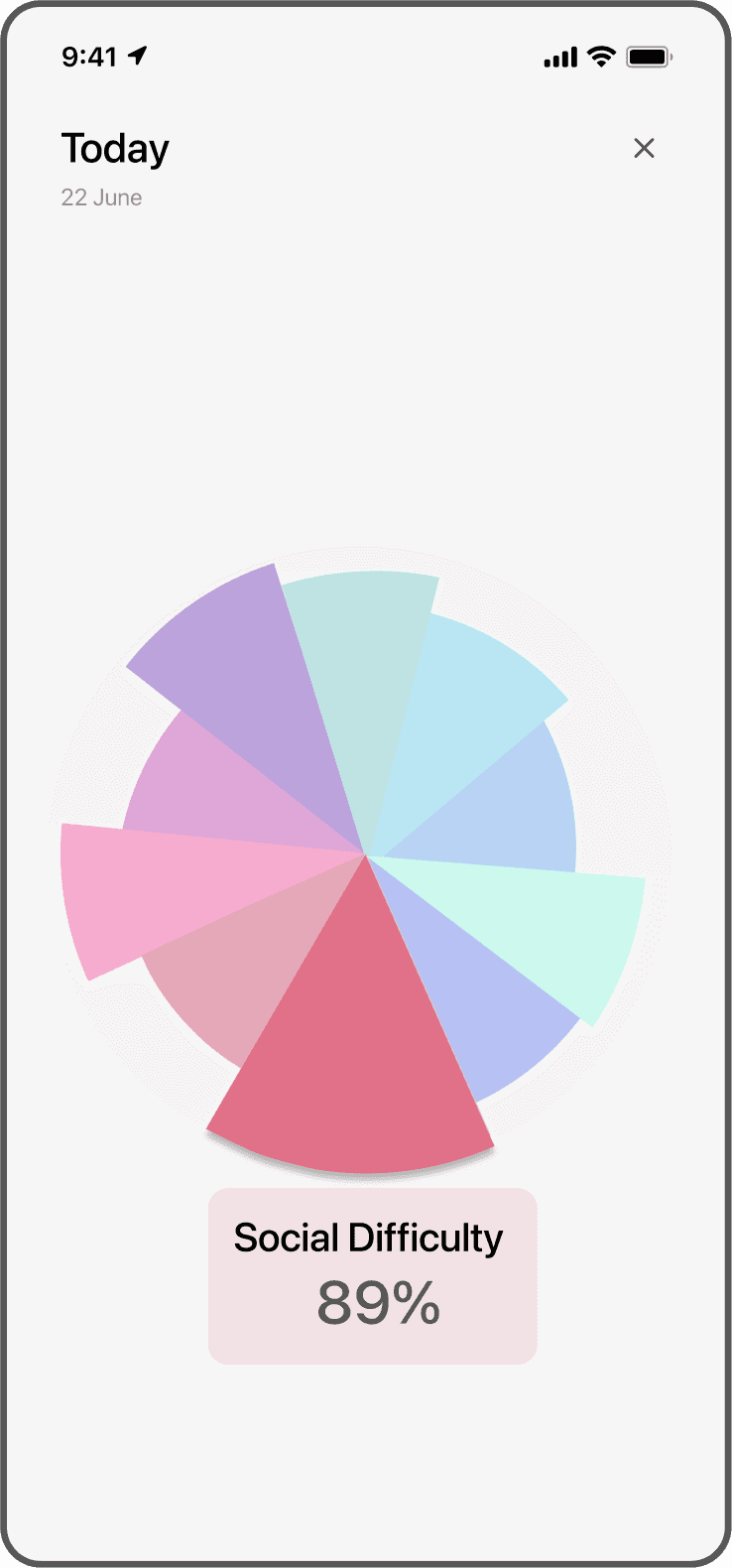

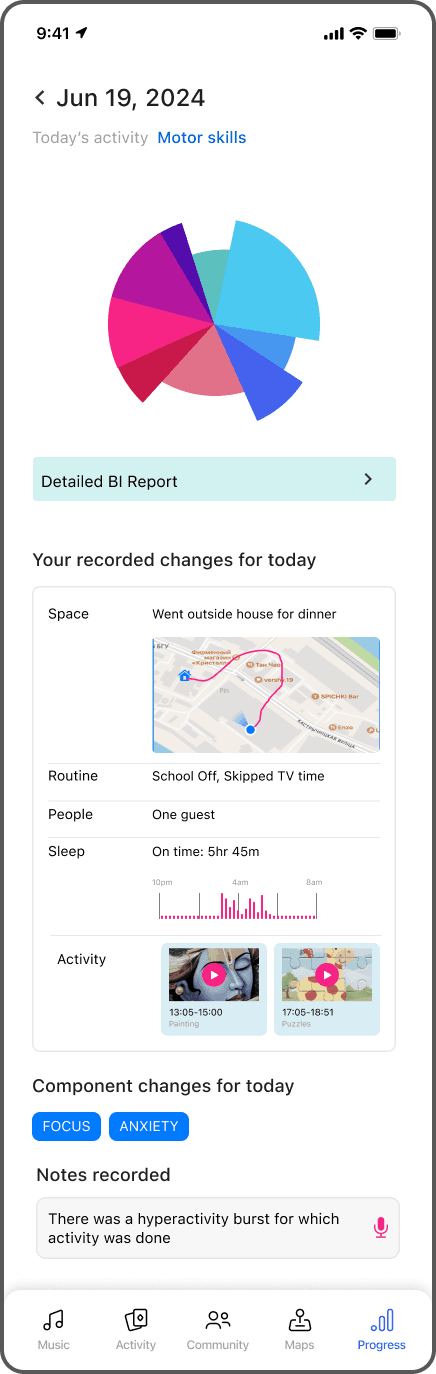
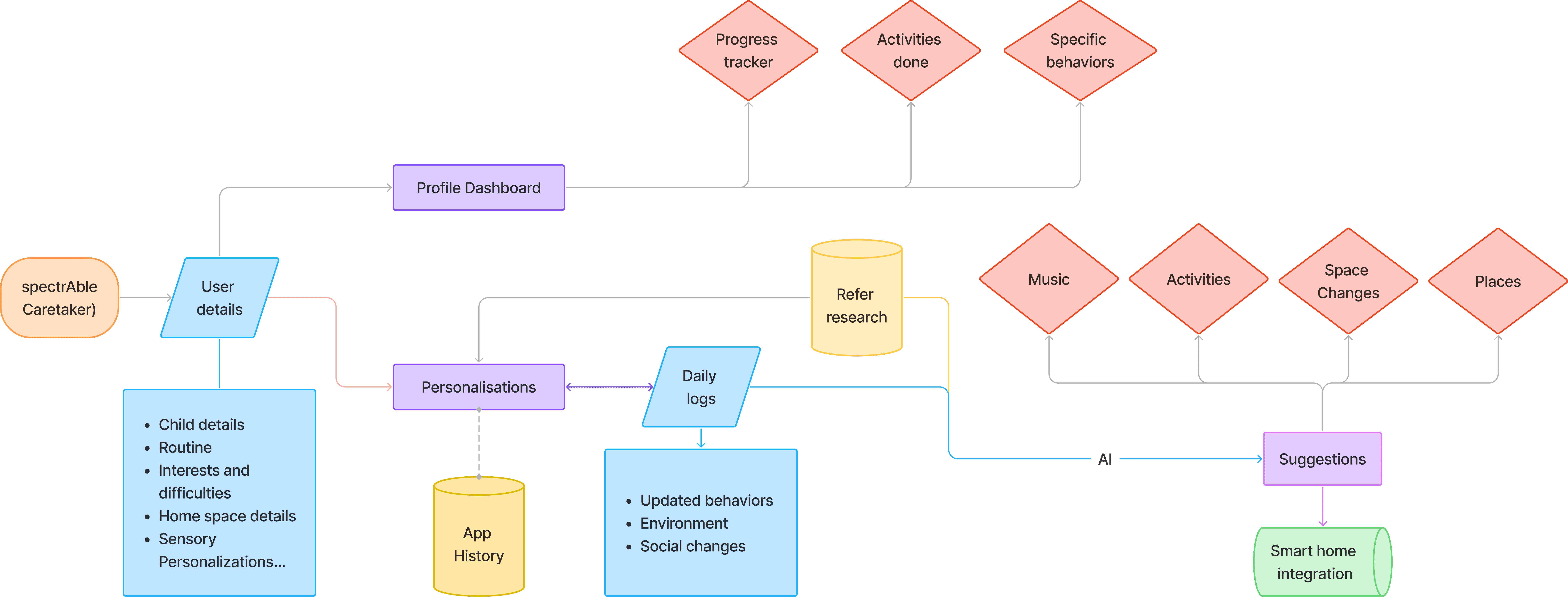
I allowed for the caretaker to log behaviors through voice logging and get a compiled set of reports to show the therapist. This would further help the therapist notice spatial and routine changes and automate the system to generate multi-sensory suggestions to try at home.
The final solution was mapped into a cohesive design system with emotion-aware UI.
Autism spectrum disorder (ASD) is a neurological disorder that is typified by difficulties with communication, social interaction, and repetitive activities. It causes the inability to comprehend and communicate emotions, especially nonverbally.

PRE-WORK RESEARCH
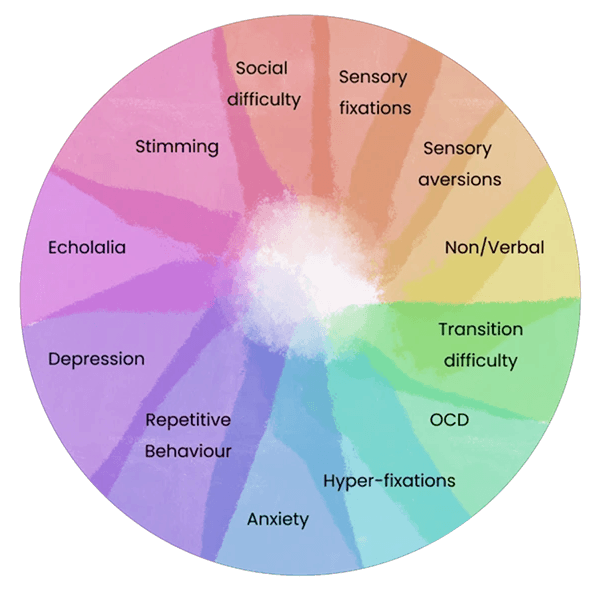
I synthesized insights from peer-reviewed intervention studies to conceptualize personalized methods that tackle the children's unique challenges.
Understanding the interventions for sensory comfort
Emotional expression and communication in children
Music and multi-sensory activities had positive responses
Could aid successful therapy translation at home

Regulating sensory stimuli by spatial zones of the house
Environmental modifications for well-being
Sensory zoning to create calming effects
Customized zoning with a structure reduced anxiety

PRIMARY RESEARCH
I used different methods to understand the therapy process and daily problems faced by the Parents, the children, and the therapists.
Interviews
With 3 parents of children (5-18) on the autism spectrum to understand:
Shortcomings and anxieties in home care
Challenges faced during emergencies
Concept Testing
With a 17-year-old non-verbal child with severe autism:
Integration of therapy at home
Validating the hypothesis of the desk research
Contextual interviews
With 3 Occupational therapists and 3 behavioral therapists:
To find the practical gaps while coordinating with caregivers
How is the behavior of the child collected


Key Insights
Primary needs of the children were drawn from routines, where music and art were used for self-expression.
Successful care plans depended heavily on caregivers, with therapy sessions largely focused on training them.
The lack of tools to assess the home environment created gaps in integrating therapy interventions.
The hypothesis for sensory interventions to help the emotional needs of the child at home was validated.
PERSONAS

IDEATION

Issues targeted
Downselection Criteria
CARETAKER JOURNEY
USABILITY TESTING
6 Therapists
6 Children & their caretakers
Timeline- 6 days
Objective
To understand the shortcomings in out-of-clinic care and the anxiety of therapy coordination at home.
Challenges faced during emergencies like outbursts
Feedback
Increased confidence in managing therapy at home
Found the tracking interface intuitive
Logging behaviors made it easier to cater care plans
Therapist input for behaviors
RESULTS
DELIVERABLE
After testing the prototype, the caretakers had an easy understanding of the behaviors of the children and could coordinate the therapy plan set at home.
Journey

Music

Activities

LEARNINGS
Every child is different, and so is every parent.
20 % of the user experience can make 80% ease of use to the existing system.
Personalization is not a solution; it is an understanding.
Data collection is difficult, but analyzing, visualizing, and cleaning make the difference while addressing inefficiencies in existing systems.
Future Changes
Phase 1
Integrating separate interfaces for both therapists and caretakers
Phase 2
Ethical Committee approval for safe use of AI
Phase 3
Add Local languages in schools and clinics
Phase 4
Automate the behavioral tracking through smart devices